
In Vitro Dermal and
Ocular Safety Studies
Expedite drug development with reliable, human-relevant results from our dermal and ocular safety assays.
Featured Assay
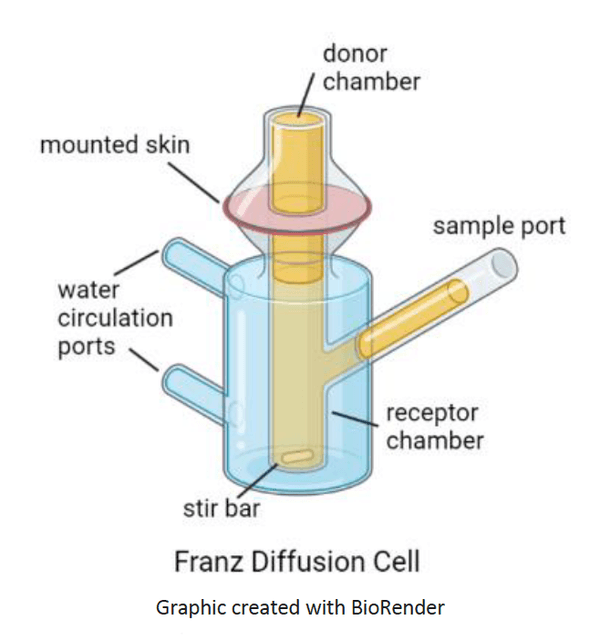
Dermal Absorption
OECD 428 or SCCS/1358/10
Dermal absorption is a primary consideration in determining the safety and/or efficacy of a dermatological product. Animal skin models do not accurately mimic human skin, therefore the “gold standard” barrier for skin permeation testing is the use of excised human skin.
For over 40 years, LifeNet Health has existed as a global leader in tissue banking and organ procurement and has an extensive, industry leading portfolio of dermal allographs. Together, these attributes and experience have allowed us to provide high quality, excised human skin, and to process the skin for dermal absorption testing.
Common Assays We Offer
Dermal Assays
Chemicals and drug products applied to the skin must be assessed for the potential to induce dermal corrosion, irritation, and sensitization. In addition to global harmonization standards (GHS) hazard evaluation, which follow OECD test guidelines, we also provide potency assessments that allow you to evaluate the degree to which a test material may cause damage to the skin.
For more mechanistic assessments, cytokine release, (e.g. IL-1α), can be performed to determine potential inflammatory responses. We also offer a histopathology option to provide a visual depiction of the degree and depth of injury to the epidermis. Custom services for quantitative assessment of dermal sensitization are also available. We are privileged to provide this service with skin donated through our anatomical gifting program or with commercially available organotypic 3D models.
Dermal absorption is a primary consideration in determining the safety and/or efficacy of a dermatological product. Animal skin models do not accurately mimic human skin, therefore the “gold standard” barrier for skin permeation testing is the use of excised human skin.
For over 40 years, LifeNet Health has existed as a global leader in tissue banking and organ procurement and has an extensive, industry leading portfolio of dermal allographs. Together, these attributes and experience have allowed us to provide high quality, excised human skin, and to process the skin for dermal absorption testing.
Assessing the risk of dermal corrosion, or the production of irreversible damage of the skin following the exposure to a substance or mixture, is a primary consideration in determining the safety of topical drugs, chemicals or cosmetics as well as in the cases of accidental exposures to chemicals, formulations, and other products. Dermal corrosion testing combined with dermal irritation testing can provide full UN GHS categorization of the chemical.
Assessing the risk of dermal corrosion, or the production of irreversible damage of the skin following the exposure to a substance or mixture, is a primary consideration in determining the safety of topical drugs, chemicals or cosmetics as well as in the cases of accidental exposures to chemicals, formulations, and other products. Dermal corrosion testing combined with dermal irritation testing can provide full UN GHS categorization of the chemical.
Assessing the risk of dermal sensitization is a primary consideration in determining the safety of a dermatological drug or cosmetic. It is also of concern in the case of accidental exposures to chemicals, formulations, and other products. Skin sensitization is a complex chemical and biological mechanism which has been summarized as an Adverse Outcome Pathway (AOP; OECD 168).
Dermal absorption is a primary consideration in determining the safety and/or efficacy of a dermatological product. Animal skin models do not accurately mimic human skin, therefore the “gold standard” barrier for skin permeation testing is the use of excised human skin.
For over 40 years, LifeNet Health has existed as a global leader in tissue banking and organ procurement and has an extensive, industry leading portfolio of dermal allographs. Together, these attributes and experience have allowed us to provide high quality, excised human skin, and to process the skin for dermal absorption testing.
Assessing the risk of dermal corrosion, or the production of irreversible damage of the skin following the exposure to a substance or mixture, is a primary consideration in determining the safety of topical drugs, chemicals or cosmetics as well as in the cases of accidental exposures to chemicals, formulations, and other products. Dermal corrosion testing combined with dermal irritation testing can provide full UN GHS categorization of the chemical.
Assessing the risk of dermal corrosion, or the production of irreversible damage of the skin following the exposure to a substance or mixture, is a primary consideration in determining the safety of topical drugs, chemicals or cosmetics as well as in the cases of accidental exposures to chemicals, formulations, and other products. Dermal corrosion testing combined with dermal irritation testing can provide full UN GHS categorization of the chemical.
The cornea of the eye is particularly sensitive to injury due to a lack of protective barriers. We offer several assays designed to predict both GHS hazard classification as well as irritation potency, which provides a quantitative assessment of potential irritation to the ocular epithelium. In addition, we can provide quantitative data on ocular pain based on the activation of transient receptor potential vanilloid 1 (TRPV1) nociceptor.
Assessing the risk of eye injury is a primary consideration in determining the safety of an ophthalmologic drugs or cosmetics. It is also of concern in the case of accidental exposures to chemicals, formulations, and other products.
The cornea of the eye is particularly sensitive to injury due to a lack of protective barriers. To predict potential eye damage, LifeNet Health offers Short-Time Exposure Assay (OECD 491).
The cornea of the eye is particularly sensitive to injury due to a lack of protective barriers. To predict potential ocular pain, LifeNet Health provides quantitative data on ocular pain based on the activation of transient receptor potential vanilloid 1 (TRPV1) nociceptor.
Assessing the risk of dermal sensitization is a primary consideration in determining the safety of a dermatological drug or cosmetic. It is also of concern in the case of accidental exposures to chemicals, formulations, and other products. Skin sensitization is a complex chemical and biological mechanism which has been summarized as an Adverse Outcome Pathway (AOP; OECD 168).
Ocular Assays
The cornea of the eye is particularly sensitive to injury due to a lack of protective barriers. We offer several assays designed to predict both GHS hazard classification as well as irritation potency, which provides a quantitative assessment of potential irritation to the ocular epithelium. In addition, we can provide quantitative data on ocular pain based on the activation of transient receptor potential vanilloid 1 (TRPV1) nociceptor.
Assessing the risk of eye injury is a primary consideration in determining the safety of an ophthalmologic drugs or cosmetics. It is also of concern in the case of accidental exposures to chemicals, formulations, and other products.
The cornea of the eye is particularly sensitive to injury due to a lack of protective barriers. To predict potential eye damage, LifeNet Health offers Short-Time Exposure Assay (OECD 491).
The cornea of the eye is particularly sensitive to injury due to a lack of protective barriers. To predict potential ocular pain, LifeNet Health provides quantitative data on ocular pain based on the activation of transient receptor potential vanilloid 1 (TRPV1) nociceptor.
Why partner with LifeNet Health® Life Sciences for your dermal and ocular safety studies?
Our experienced team is committed to helping you identify and customize Absorption, Distribution, Metabolism, Excretion, Toxicity (ADMET), Drug Metabolism, and Pharmacokinetic (DMPK) Assays that accurately assess your drug candidate using methods based on current regulatory guidelines.
Our expansive services portfolio includes standardized methods as well as advanced methodologies only available to our partners. Our ability to utilize directly sourced, high-quality human tissues sets us apart, enabling DMPK/ADMET data that more accurately reflects human biology.
Our assay services team is committed to performing IND-enabling studies and delivering high-quality data with timely turnaround—at every stage of your project.



Expert regulatory
guidance

Resources
Looking for additional information on our assays?