Detect Species-Relevant Changes in Thyroid Hormone Metabolism for Chemical Safety Studies
Compound-induced changes in liver-mediated clearance of thryoxine (T4)-specifically via T4 glucuronidation (T4G)-is a critical event in rodent liver-thyroid mode-of-action (MoA) pathways. Thyroid hormone metabolism and nuclear receptor activation differs quantitatively between rodents and humans, making it challenging to assess the human relevance of rodent in vivo data.
TruVivo provides a reliable, long-term culture system for both primary rat and human hepatocytes to support quantitative assessment of species-specific differences in compound-induced effects on nuclear receptor activation and corresponding changes in T4 metabolism. Our flexible media system allows researchers to tailor their experimental conditions to address species-specific hepatocyte culture requirements and deliver more predictive outcomes in T4 metabolism and clearance via glucuronidation pathways.
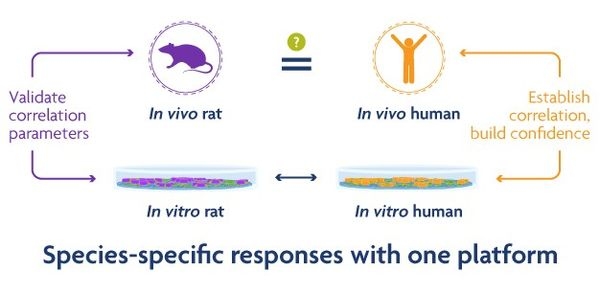
- Maintains rat and human hepatocyte phenotypes over prolonged exposure periods (7+ days) used for nuclear receptor agonist studies
- Detects species-specific patterns in chemical-induced changes in T4 glucuronidation
- Accurately captures species-specific responses to positive, negative and selective reference compound sets.
- Provides quantitative data for thyroid safety and risk assessments
Dive into the data and see how TruVivo:
- Enables quantitative measurement of T4 glucuronidation
- Preserves expected species differences between human and rat
- Detects nuclear receptor-mediated, species-specific induction of T4G
View Additional Resources